Latest News
We've added an observation log of bird activities for the first half
of 2006. Click to read...
Winter Quarterly Report for Ka’elepulu Wetland, 12-2005
through 2-2006
Introduction
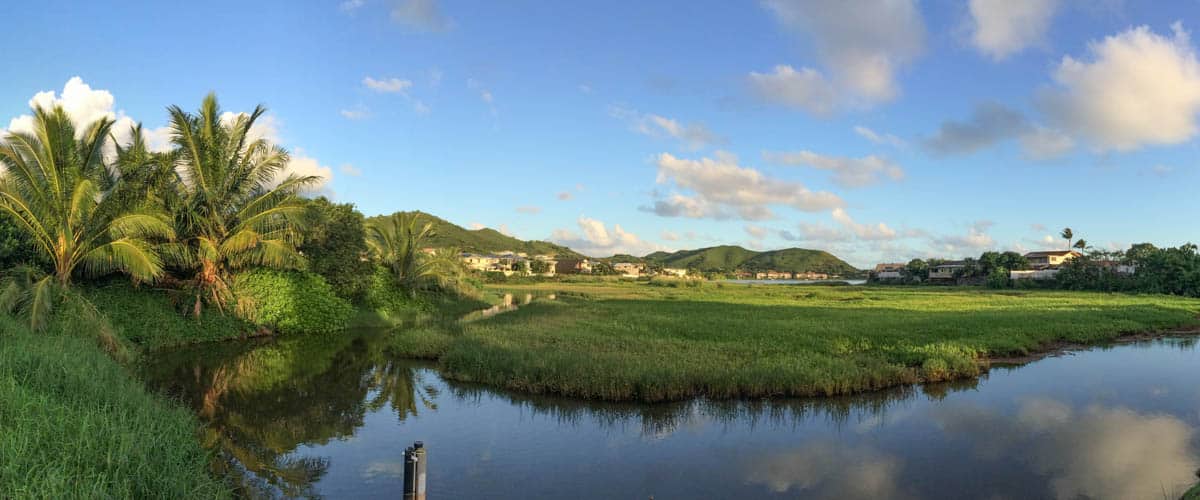
Through December and January rainfall was very light and water levels
were stable. However, from mid February through mid March over 17 inches
of rain fell. Severe flooding occurred in March on all islands. On 2-19
flood waters completely covered all of the islands. The following weeks
saw water levels fluxuate greatly. During the very low water periods,
just prior to the March deadline for cessation of work on the islands,
opportunities arose for mowing of some normally flooded batis areas makai
of the islands. Large areas for stilt feeding and many new sites for
potential nesting were cleared.
Vegetation Management
Work continued with the preparation of fringe zones on all islands.
Greatest attention was given to islands two and three where much of the
waters edge was still occupied by impenetrable growths of batis. The
island crowns were sprayed as needed to suppress emergent weeds.
Stilt Nest Site “Foot Print”
A close examination of last year’s known stilt nest sites was made.
Instead of nesting in large open areas set back from the water’s
edge, stilts chose smaller patches with emergent batis just leeward of
open water. This “footprint” was reproduced in twelve new
areas next to cleared “fringe” habitats. These potential
nest sites were spaced all along the mauka bank of the stream and the
mauka edge of the ponds and flats. The mauka edges of these bodies of
water lie to the lee of the open water. (It is observed that birds always
start flight by jumping into the wind and thought that they may choose
nest sites with a consideration of escape from predators.)
Brush removal along the stream bank starting at the floating docks was
completed. Paspalum planted at the water’s edge along the moat
and stream bank became well established and provided feeding habitat
The Bulboshonus sp. that has been planted with the grass grows well.
Mowing of the moat bank covered with Widelia and other invasive plants
is done principally by Ron Walker who volunteers his Friday mornings
and his weed whacker. Freshly mowed areas are frequented by stilts and
other residents of the wetland.
Mangrove seedlings continued to be removed. These were most accessable
by canoe during high water periods near the end of the quarter.
The native plantings near the dock continue to grow. New growth has appeared
in the Bulboshonus patches. Cyperus sp. sedges, previously found along
the makai bank of the stream channel, near Al’s dock, have been
cultivated from seed collected prior to the die off there. These plants
in dibble tubes should be ready for outplanting next quarter.
Island Crown Weed Recruitment and native plants
The flood that covered all islands in February deposited large numbers
of weed seeds on the island crowns just a few days before the USACE guidelines
forbade management work on the islands. Unfortunately these invasive
plants now have six months to grow before control work can resume.
Two species of native plants surviving on the crowns have been tentatively
identified. These are drought tolerant indigenous species, Portulaca lutea and Heliotropium
curassavicum. When work on the islands resumes in the Fall
propagation efforts using seeds may be undertaken with the goal of conserving
a native plant community.
Other likely candidate species for the community include Sesuvium
portulocastrum,
and the grass Sporobolus virginicus. Interestingly, a unique subspecies of
S. virginicus inhabits the windward Oahu coast. The Manual of Flowering Plants,
Wagner, Herbst, Sohmer, pg 1597, says “Sporobolus virginicus var.
phleoides was described for plants on windward beaches of Oahu, and was distinguished
by having shorter and thicker inflorescences.” Kailua beach may be an
appropriate source of seeds for this unique grass. In partnership with other
wetland managers in the watershed, species may be transplanted from nearby
wetlands.
Bacopa Growth
The Bacopa. monnieri., named ai’ai in Hawaiian, has begun a period
of re-growth as the rainfall increased at the end of the quarter. Growing
patches of it are found along the moat and stream banks. If these become
large enough to provide bridges to the islands for predators the patches
may be controlled. No apparent die-off events have been observed this
quarter.
Predator Control and Predation
Frog Control
Bullfrogs continued to be caught occasionally on the stream bank throughout
the quarter. After Februarys heavy rains the catch rate increased significantly.
Mature males and females are caught, never smaller juvenile frogs. Calling
frogs are currently heard on both sides of island two and island one. This
represents an expansion of their range from the stream. Plans are being made
for the construction of another trap.
Rat Control
Rat bait stations were maintained weekly. Because they are accessed by canoe
during breeding season some have been relocated to be more accessable. During
the several floods all of the stations were covered in water and the baits
were ruined. Traps were then placed in higher locations, occasionally on
top of batis clumps. Several stations were lost in the March flood and were
replaced.
Opala Patrol
Trash and spray paint cans were collected during the period quarter.
Cans were especially abundant after the February flood. As usual few
of the cans had spray caps on them. We have learned that graffiti is
usually done with specialized spray tops, explaining the absence of the
tops and confirming that these cans are probably from people doing graffiti.
Bird Observations
Species of Note
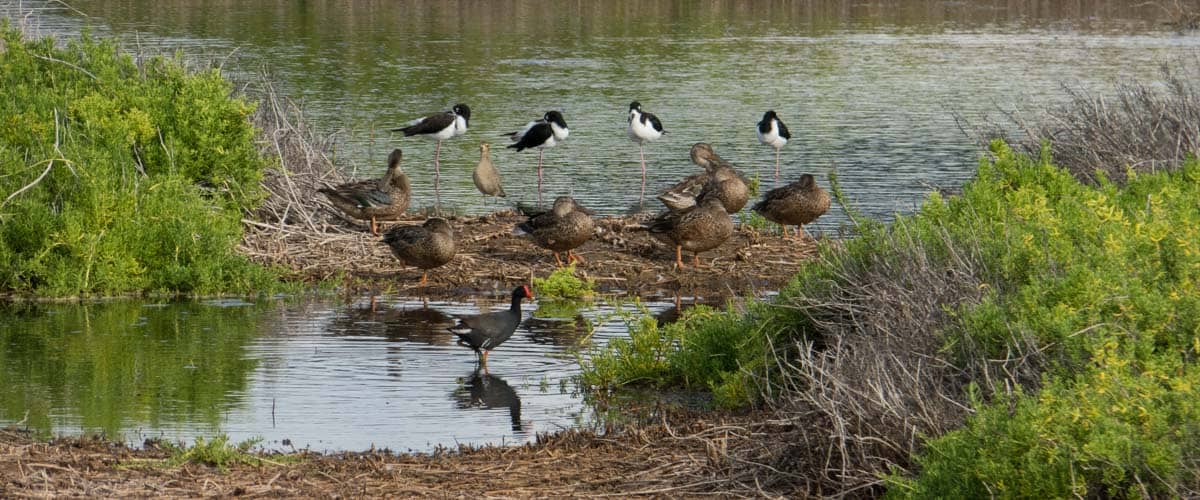
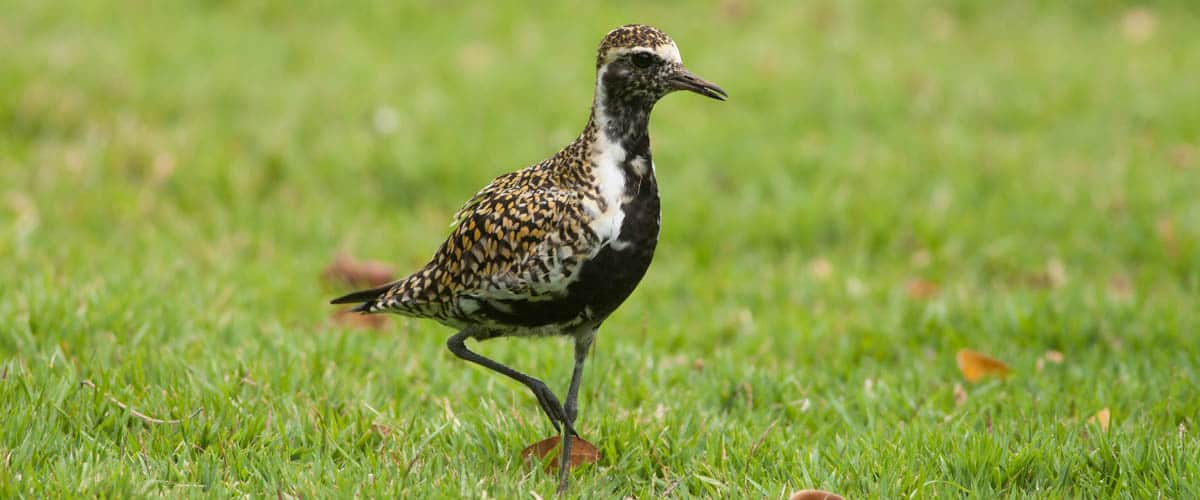
Kolea, wandering tattlers and Ruddy Turnstones continue to use the habitat.
Black bellied plovers, which are very similar to golden plover but frequent
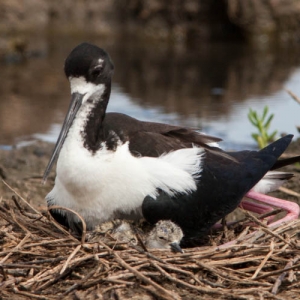
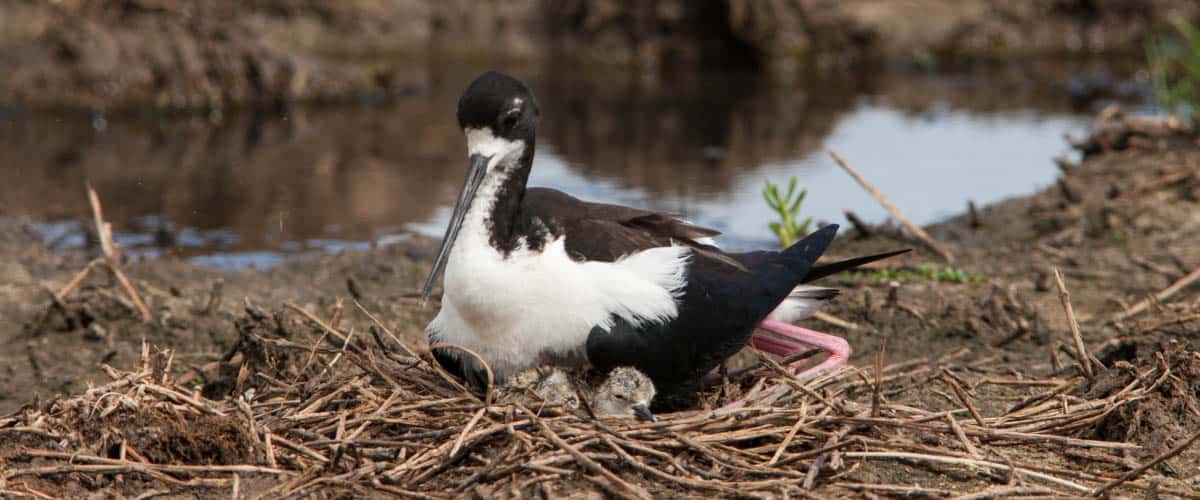
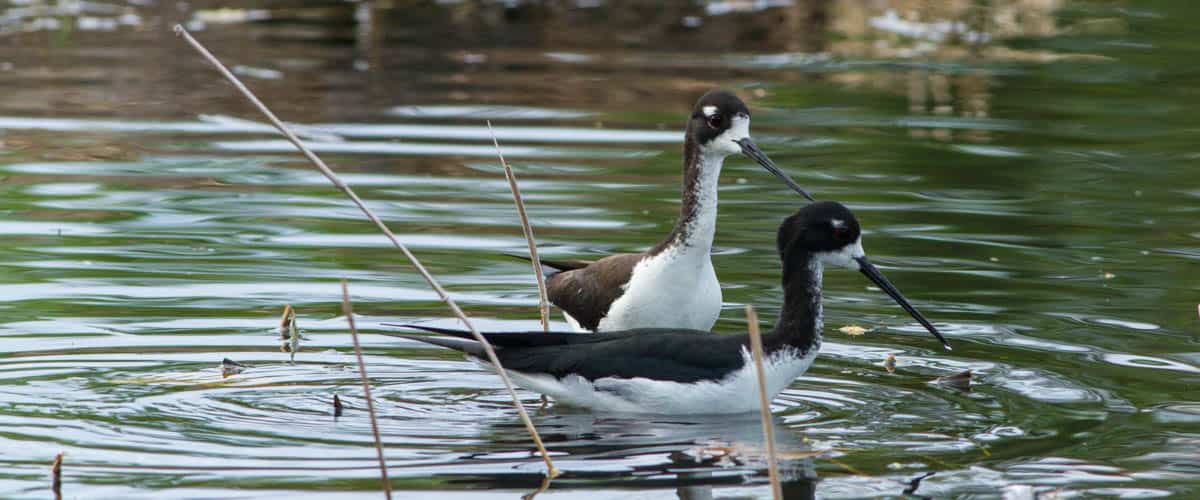
mud flats and coastal habitats, have been identified. Stilts have been
abundant this quarter with over 30 individuals counted in February. There
seems to be a transient and a resident group within the large population.
The resident group is thought to be the breeding population. Included
in the resident group is the female with three bands which nested successfully
on island one last year. She has again been frequenting island one.
One stilt with a broken hip or leg was observed over a period of weeks.
This individual had a band on its good leg. Bill Carlisle has been keeping
track of the stilts and has compiled a table of his observations. Stilt
courtship behaviour has been infrequent this quarter but has become common
in May.
Water Level and Rainfall Observations
The data from the water level gauge and rainfall gauge are reported
separately in an Excel file with a graph. For most of the quarter rainfall
was relatively low and the sand berm at Kailua beach was not significantly
breached to lower the water level. The City and County opens the berm
monthly at mid month but, unless this coincides with a heavy rainfall,
the level is not greatly reduced. This is thought to be because the flow
rate through the C&C gap is not sufficient to cause a drop in the
lake level nor to prevent the resealing of the gap by natural beach migration
of sand.
When heavy rains fall, the lake level appears to rise quickly in proportion
to rainfall. Flood peak follows the rainfall event within a few hours due to
the small size of the watershed and the channelization of the urban areas.
When some critical point is reached the stream at Kailua Beach breaches the
sand berm and a large volume of flood water drains from the lake. The lake
level then drops to a point where equilibrium with the ocean tides through
the mouth of the stream is established. Then a period of days or weeks is required
for the sand berm to naturally rebuild and the lake level to become relatively
stable once again. After the berm is rebuilt, water levels may rise with rainfall
if the input is not enough to overtop the berm at the mouth of the stream and
initiate another cycle of rise-drop-equilibration-stabelization.
During the post-flood period when the lake levels may mirror oceans levels.
The water can be low enough so that the dike bottom is exposed and land bridges
across to bird habitats are exposed. This is a concern for predator control.
Breeding Activity
Feral Birds
A pair of white geese from the resident flock began nesting in January. Eggs
are laid every other day and have been collected through February and March.
One or two eggs are kept in the nest so as to promote laying and avoid abandonment
of the nest. In
Last year eggs were simply oiled after the female began incubation and after
several weeks the nest was abandoned and the pair nested in an inaccessible
site. Those eggs hatched and produced a flock of goslings. To avoid nest abandonment
the egg laying period is being prolonged for 8 weeks by the collection of eggs
described above. At the end of March eggs will be left in the nest and will
be oiled two weeks after incubation begins. Hatching is assumed to occur at
three weeks. It is hoped that when the eggs and nest are eventually abandoned
that the birds will not re-nest this season.
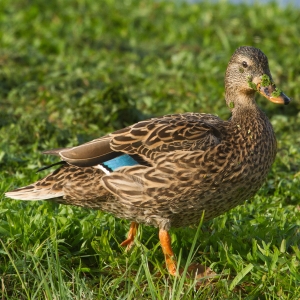
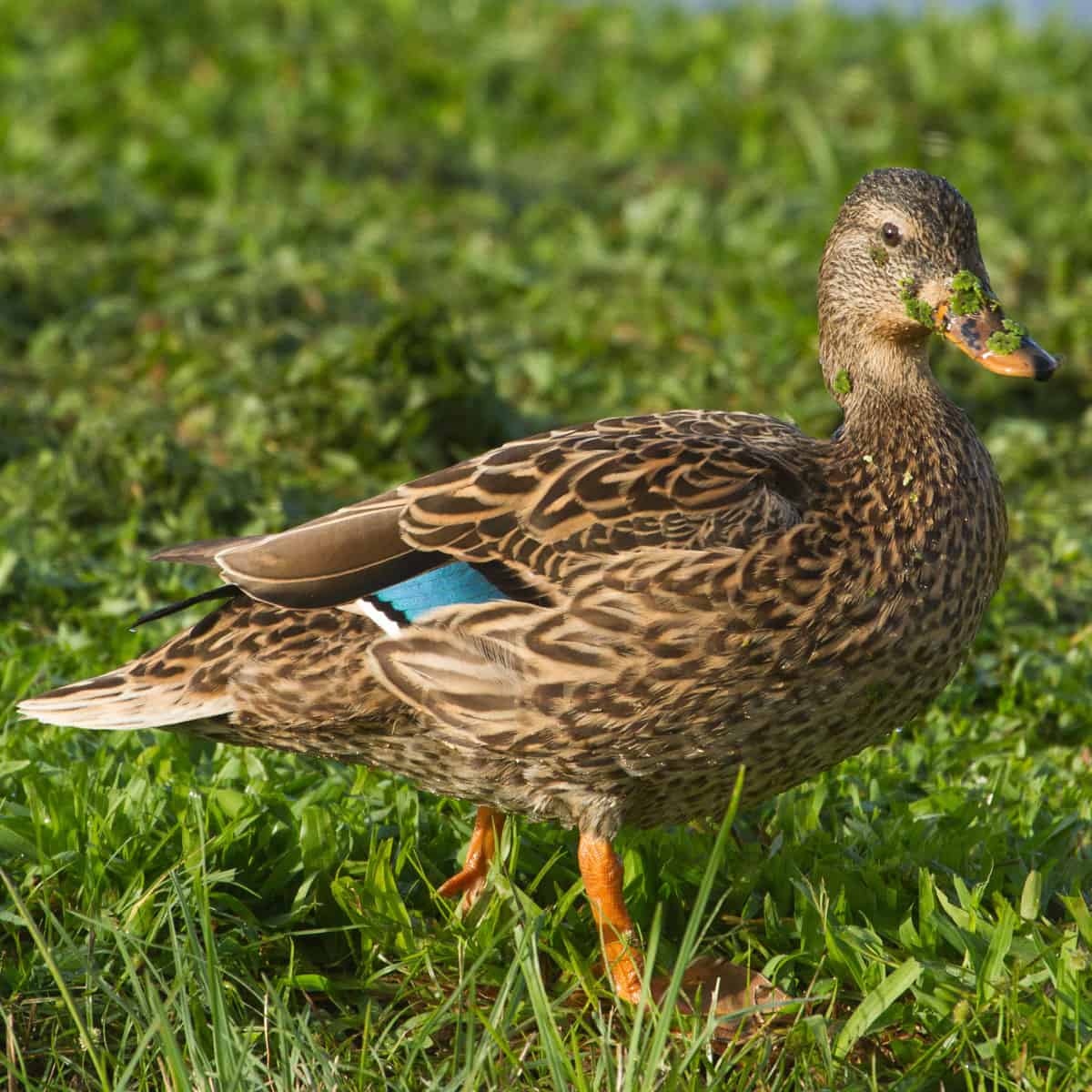
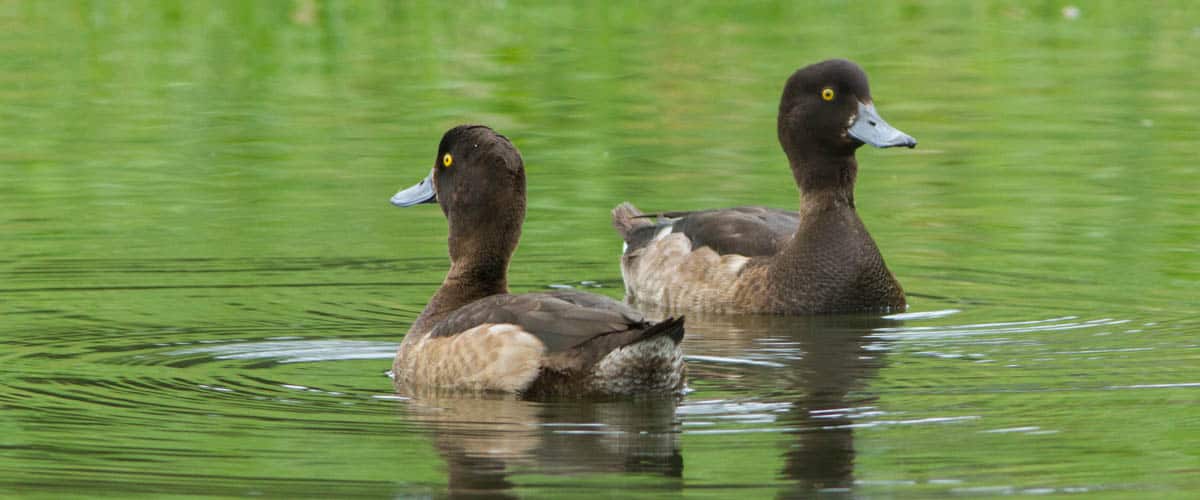
Mallards have successfully hatched several broods this quarter. Mortality rates
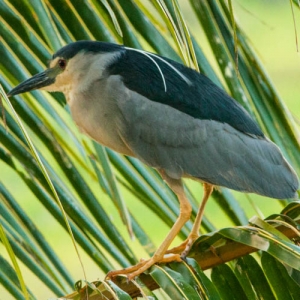
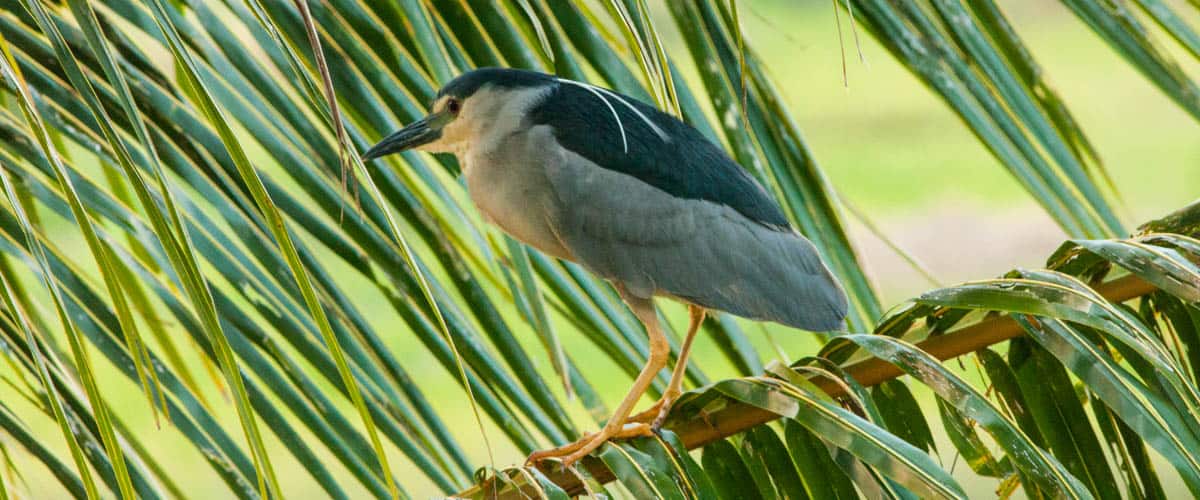
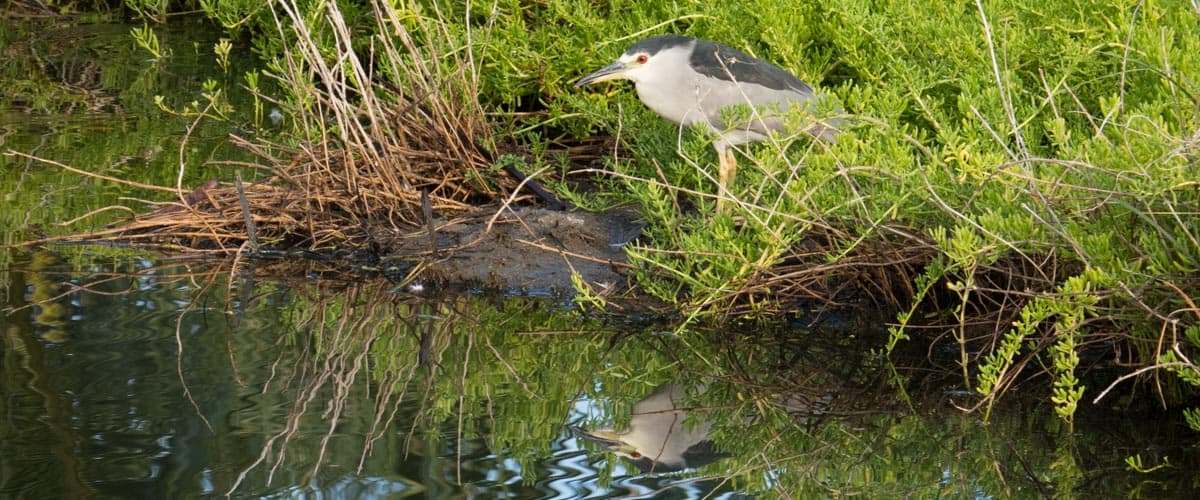
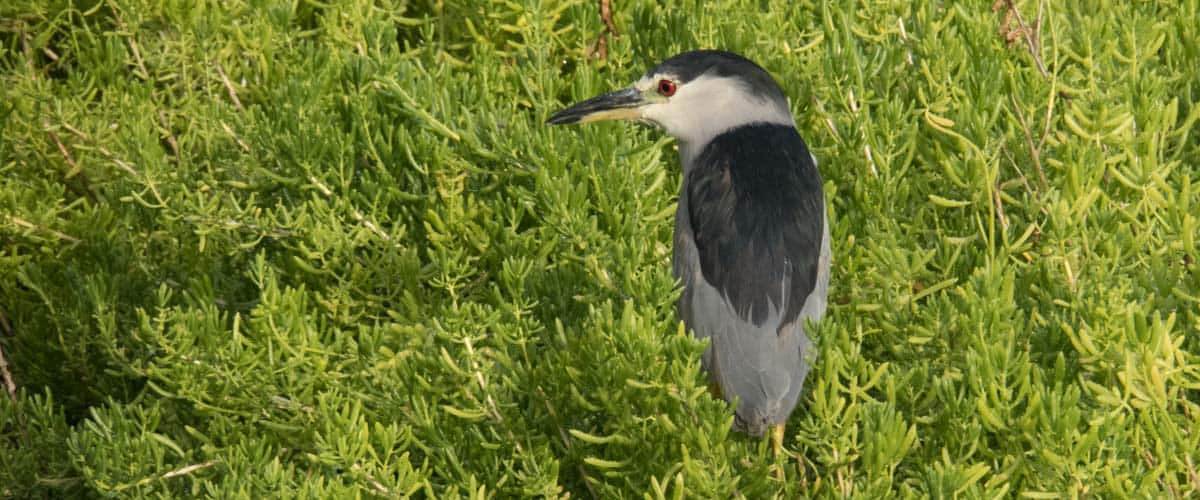
continue to be 100% in most cases. Night heron predation is most likely the
principal cause of mortality. Some clutches of eggs have been discovered and
oiled. The flood in February inundated two known mallard nest sites.
Native Birds
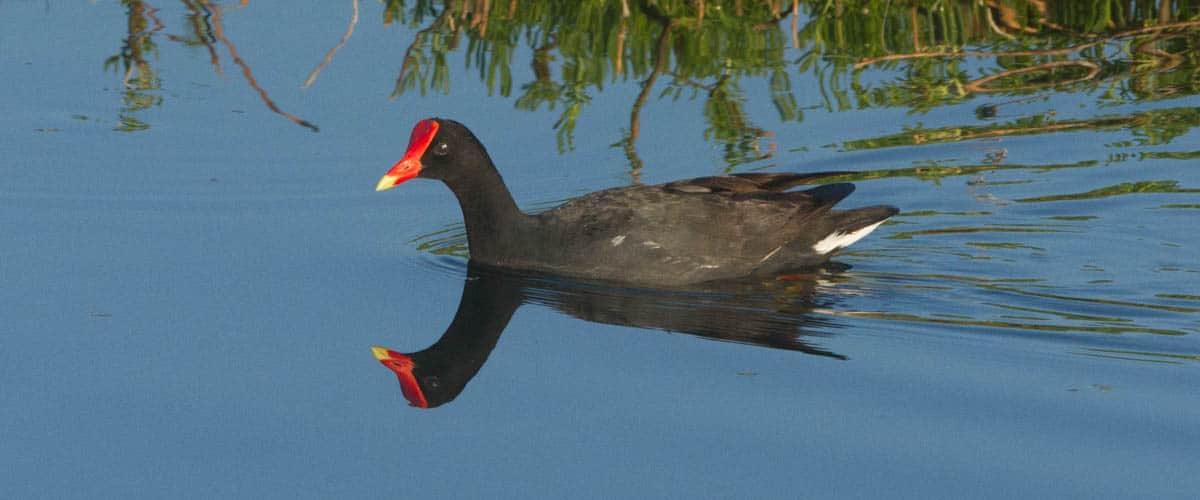
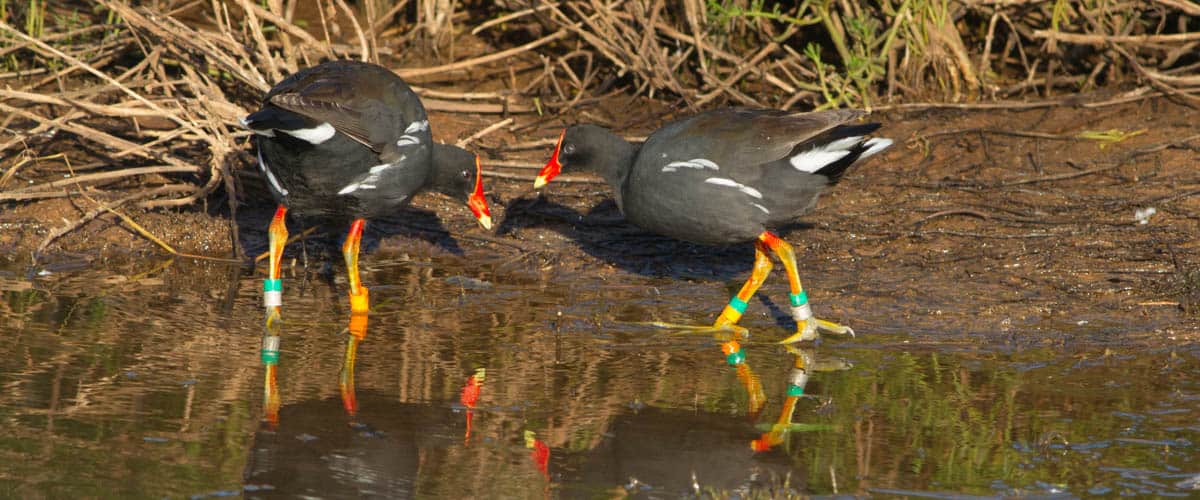
In January, most likely, a brood of gallinules hatched in an Island Two territory.
At the end of February three chicks that appeared almost fledged were reported
by Bill Carlisle. These birds were from a second brood. There has been a
lot of territorial and courtship behaviour among the gallinules this quarter.
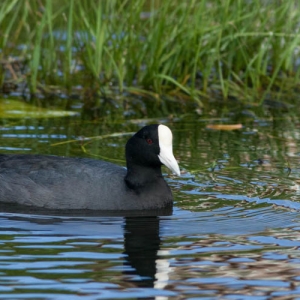
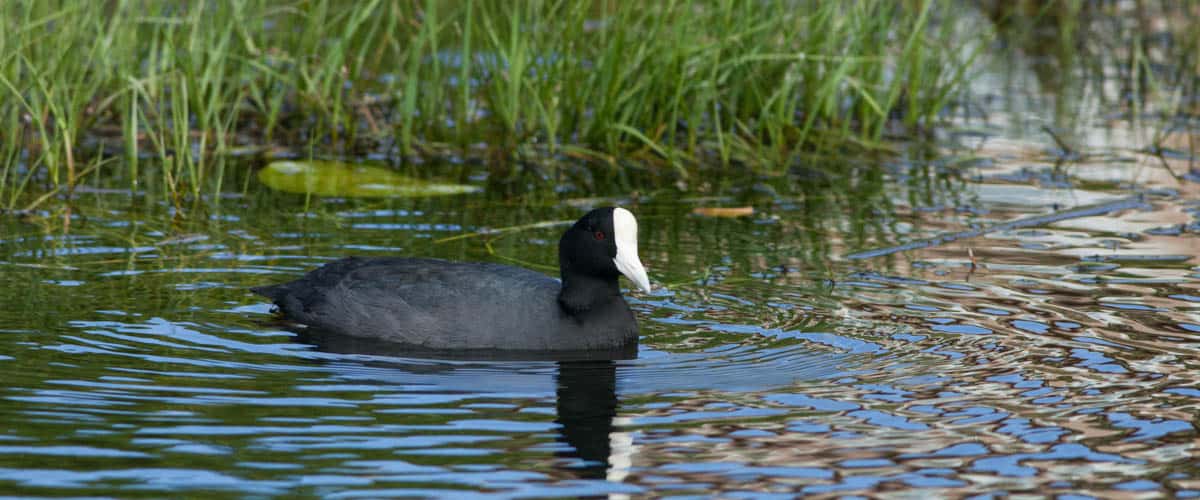
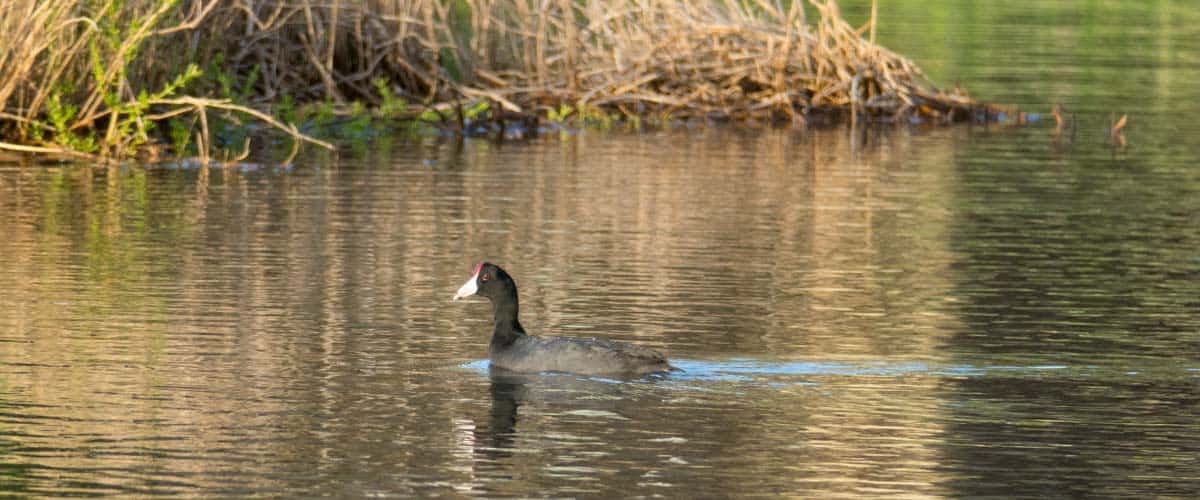
Coots have been nesting but no chicks have been seen as of March. All of the
known nests were flooded in February.
Locations of Nest Sites
Nest sites were not mapped this quarter but were typically found in
the same areas as previously reported. Study of stilt nesting in the
newly prepared sites will be undertaken when feasible next quarter.
Summary
Habitat management during the Winter Quarter was conducted with the
objective of providing better feeding and nesting for stilts during variable
water
levels. Rainfall and resulting water levels in the wetland were quantified.
No disease outbreaks or new predator problems were observed. Heavy rainfall
caused temporary flooding of habitat and nests at the end of the quarter
and caused an expansion of the bull frog range.
Previous Reports
Fall 2005
|